What Makes a Mortise Lock Different From Standard Commercial Hardware
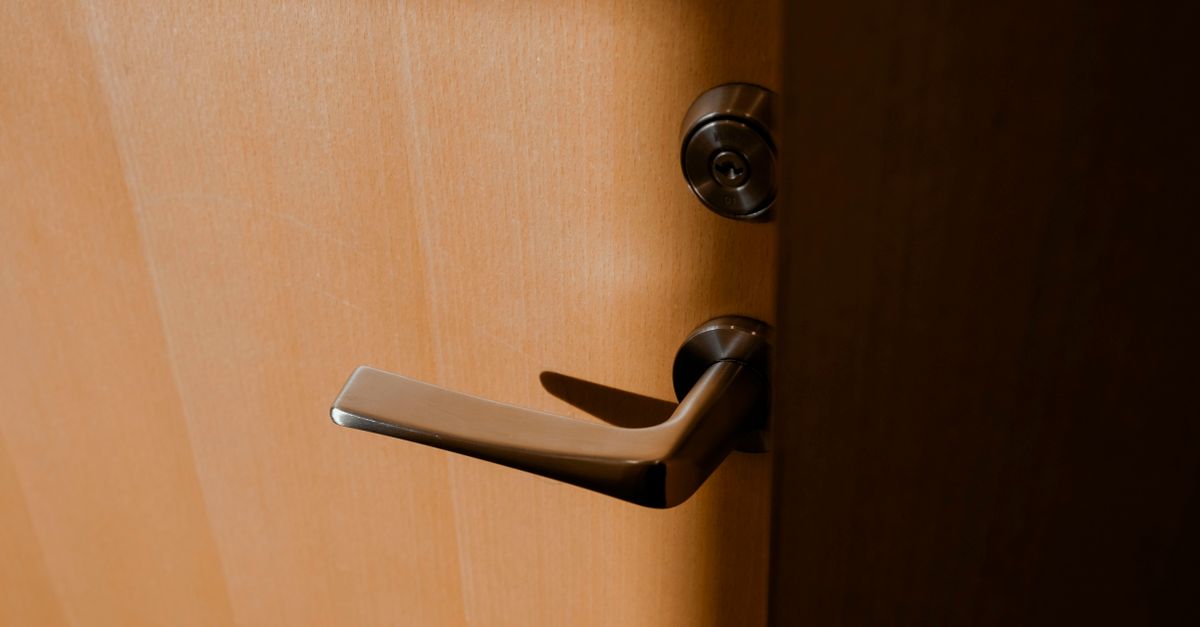
A mortise lock earns its name from the mortise — a precisely routed pocket cut into the edge of the door body. The entire lock case slides into that pocket, leaving only the trim, handles, and cylinder visible on the surface. This internal fit distributes force across the full door thickness rather than relying on two or three mounting screws the way a cylindrical lock does. On a storefront door that employees unlock every morning and customers push open hundreds of times a day, that structural advantage is the difference between hardware that holds for decades and hardware that strips out in a few years. Brands like Corbin Russwin and Baldwin have built long reputations manufacturing mortise lock sets to exacting tolerances precisely for this commercial environment — and our technicians are experienced working with both, along with a wide range of other commercial-grade manufacturers.
Beyond sheer strength, a mortise lock set supports a level of function that simpler hardware cannot match. A single case can be configured as a classroom function, a storeroom function, an entry function, or an office function — each controlling exactly who can lock, unlatch, or deadbolt from which side and under what conditions. Many Englewood property managers layer additional access control on top: an electric mortise lock wired to a buzzer panel at a reception desk, or a smart mortise lock integrated with a key-fob or mobile-credential system. Our commercial locksmith team handles the full spectrum, from purely mechanical re-keying to electrified and smart-lock integration.